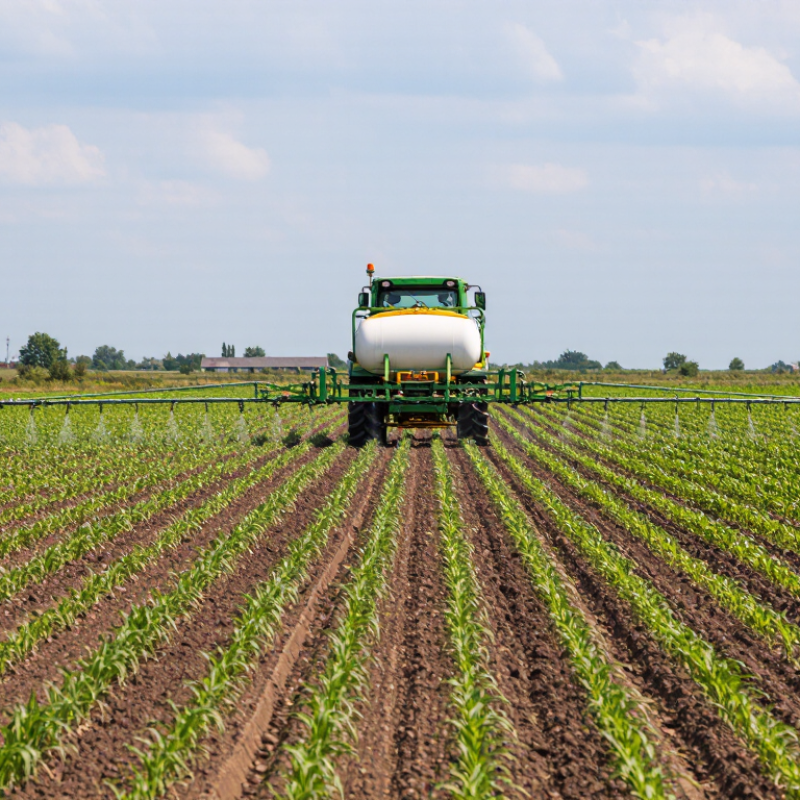
Liquid Nitrogen For Corn is not a magic yield booster. It is a practical way to supply nitrogen, a nutrient corn needs in substantial amounts. Applied as a liquid, it can be placed before planting or during the growing season, depending on the product, equipment, soil, and weather. The sight is familiar: a toolbar crossing young green rows, leaving fertilizer near the root zone. But timing and placement matter as much as the liquid form.
USDA Economic Research Service fertilizer-use tables track nitrogen applications by crop and year, showing why broad recommendations can mislead: rates differ across regions and seasons. Iowa State University’s Corn Nitrogen Rate Calculator also uses field-trial results and fertilizer and corn prices to estimate an economic rate, rather than promising one universal number. Dr. Fred Below, a University of Illinois crop physiologist known for research on corn production, has described nitrogen as “the most important nutrient for corn production.” That principle is useful, but not a prescription.
Liquid nitrogen can support timely application and efficient field operations. It can also be lost through volatilization, leaching, or denitrification when conditions are unfavorable. A wet spring, sandy soil, or poorly timed application changes the risk. The tank is only part of the decision. Growers should consider soil tests, local extension guidance, product labels, and realistic yield goals. Even careful plans can miss the mark; field conditions are stubbornly variable. The best reason to use liquid nitrogen is not convenience alone, but a measured match between crop need, application timing, and local evidence.
Liquid Nitrogen at −196°C: The Cryogenic Basis for Freezing Corn
Liquid nitrogen boils at about −196°C at normal atmospheric pressure, making it an extremely cold medium for freezing corn. When it contacts warm kernels, it rapidly absorbs heat and turns into nitrogen gas. The kernels’ surfaces cool quickly, while heat continues moving outward from their warmer centers. Cold works fast. This rapid cooling can limit the formation of large ice crystals, which may damage cell structure and leave thawed corn softer.
In commercial processing, kernels are spread in a controlled flow so cold gas can reach them evenly. Corn may be blanched before freezing to slow enzyme activity; liquid nitrogen does not replace that step. Freezing is not sterilization. Temperature, exposure time, and airflow all affect the result, so the boiling point alone cannot predict final texture.
The visible plume is mostly condensed moisture in the air, not a cloud of nitrogen. Operators also need suitable ventilation and protective equipment because extreme cold can injure skin, and displaced oxygen can create hazards in enclosed spaces. There is a trade-off: very rapid freezing can help preserve a kernel’s bite, but uneven exposure may leave some pieces firmer than others. The temperature sounds decisive; the process is less simple.
From Harvest to Processing: Where Cryogenic Freezing Fits
Liquid nitrogen fits into a narrow window between harvest and packaging. Sweet corn loses tenderness quickly after picking, so processors move it promptly to husking, cleaning, cutting, and blanching. Timing matters. The USDA National Agricultural Statistics Service reported 14.9 billion bushels of U.S. corn production in its 2024 Crop Production Annual Summary. Most of that is field corn, not sweet corn for freezing, but the figure shows the scale of corn handling. That distinction is easy to miss.
After preparation, liquid nitrogen can rapidly freeze kernels or cob pieces on a conveyor. The ASHRAE Handbook places liquid nitrogen’s boiling point near −196°C; its intense cooling can help form small ice crystals and limit clumping. It does not replace blanching or careful sanitation. Nor does rapid freezing make poor raw material good. A practical line still needs even product spacing, controlled residence time, and reliable freezer ventilation. Operators watch for wet kernels sticking together and unevenly frozen centers. Cold, fast, but not automatic. The process also consumes nitrogen, so teams weigh product quality against operating cost and supply logistics. Once frozen, corn must stay cold through storage and transport; temperature swings can dry kernels and weaken texture. Cryogenic freezing is therefore one processing step, not a substitute for a disciplined cold chain.
Why Is Liquid Nitrogen Used for Corn? — From Harvest to Processing: Where Cryogenic Freezing Fits
Temperature benchmarks help show why liquid nitrogen belongs at the freezing stage—not in frozen storage.
After harvest, corn is typically cleaned and prepared; some products are blanched before freezing. Liquid nitrogen can rapidly remove heat during freezing. Its boiling point is about −196°C at atmospheric pressure, while −18°C is a common frozen-food storage reference. These are temperature benchmarks, not fixed corn-processing setpoints.
Rapid Freezing and Kernel Quality: Limiting Ice-Crystal Damage
When corn freezes slowly, water inside each kernel has time to form larger ice crystals. These crystals can press against cell walls, leaving thawed kernels softer and wetter. Liquid nitrogen, at roughly −196°C, removes heat rapidly. That limits the time available for large crystals to grow. That matters.
In a cryogenic freezer, cold gas or liquid cools the kernels while airflow carries heat away. Separate kernels can freeze more evenly than a dense clump. Smaller ice crystals generally cause less structural damage, helping corn retain a firmer bite and release less liquid after thawing. Not perfectly. Kernel size and moisture still affect the result.
There is a practical catch: rapid freezing cannot undo damage from rough handling or poor-quality corn. Storage matters, too. Temperature swings can encourage ice crystals to grow again, even after quick freezing. So the freezer is only part of the process. Consistent cold storage and a controlled thaw help protect kernel texture.
Why Is Liquid Nitrogen Used for Corn? - Rapid Freezing and Kernel Quality: Limiting Ice-Crystal Damage
| Dimension |
Relevant fact or condition |
Relevance to corn kernel quality |
| Liquid nitrogen temperature |
At standard atmospheric pressure, liquid nitrogen boils at approximately −196°C (−321°F). |
Its very low temperature can remove heat rapidly when used in a properly designed freezing process. |
| Freezing rate |
The actual freezing rate depends on kernel size, product load, contact with the cryogen, and equipment design. |
Rapid heat removal can shorten the time kernels spend forming ice, but liquid nitrogen alone does not guarantee a particular texture or freezing rate. |
| Ice-crystal formation |
Faster freezing generally produces smaller ice crystals than slower freezing under comparable conditions. |
Smaller crystals can reduce physical damage to cell structures, helping limit softening and moisture loss after thawing. |
| Kernel texture |
Texture after thawing is also affected by corn maturity, blanching, freezing conditions, and storage history. |
Rapid freezing can help preserve firmness, but it cannot reverse quality loss caused by overripe kernels or poor handling. |
| Blanching before freezing |
Blanching corn before freezing is commonly recommended to slow enzyme activity that can affect flavor, color, and texture during storage. |
Cryogenic freezing does not replace blanching when blanching is part of the chosen food-preservation process. |
| Frozen storage |
A freezer temperature of 0°F (−18°C) or below is a standard recommendation for maintaining frozen food quality. |
Stable, sufficiently cold storage helps limit quality deterioration after freezing; temperature fluctuations can reduce quality. |
| Handling safety |
Liquid nitrogen can cause severe cold burns and must be handled with suitable equipment and ventilation. |
Food must not be served while liquid nitrogen remains in or on it; safe processing requires the cryogen to evaporate completely. |
General processing information; freezing performance and final quality vary with the corn and the process used.
Food-Safety Status: Nitrogen Is GRAS Under 21 CFR §184.1540
Why Is Liquid Nitrogen Used for Corn?
Liquid nitrogen can cool corn kernels very quickly. When it touches the warm kernels, it boils and becomes nitrogen gas. The rapid cooling can help freeze corn while limiting the time kernels spend at warmer temperatures. Most of the nitrogen disperses into the air; it is not meant to remain as a special ingredient. Cold kernels, crisp edges.
For food safety, 21 CFR §184.1540 lists nitrogen as generally recognized as safe when used according to good manufacturing practice. That status is conditional, not a blanket approval for every process or amount. It does not replace careful equipment controls, clean handling, or temperature monitoring. Nor does GRAS mean liquid nitrogen is harmless to workers: its extreme cold can injure skin, and released gas can displace oxygen in poorly ventilated spaces. The regulation addresses food use, while safe operation still requires practical precautions.
Tips: Keep corn cold after processing, and follow the equipment maker’s handling instructions. Use suitable ventilation and protective equipment around liquid nitrogen. If kernels warm during storage, reassess the process rather than relying on GRAS status alone.
Frozen-Corn Storage: USDA Guidance Targets 0°F (−18°C)
USDA guidance for home freezers centers on 0°F (−18°C) or colder. That temperature helps keep frozen corn safe and slows quality loss, though it cannot restore freshness lost before freezing. A small freezer thermometer is more reliable than the appliance dial. Check it after the door has been opened often or during a power interruption. Cold air matters.
Liquid nitrogen is used in some commercial processes because it freezes corn very quickly. Rapid freezing forms smaller ice crystals, which can help kernels retain a firmer texture after thawing. The process requires specialized equipment; liquid nitrogen is not a household freezing shortcut. At home, prepare corn promptly, package it in airtight containers, and keep it at 0°F or below. Blanching before freezing is commonly recommended to slow quality changes. It does not make old or poorly handled corn fresh again. Freezing also does not erase every handling mistake. A freezer dial can be optimistic, and packed bags can hide warm spots, so leave room for air to circulate and check the temperature.
Conclusion
Liquid Nitrogen For Corn provides an extremely cold medium for rapid freezing, with a temperature of about −196°C. In commercial processing, corn is harvested, prepared, and then exposed to cryogenic freezing as one step in moving it from the field toward frozen storage. The fast cooling can help limit the formation of large ice crystals, which may damage kernel structure and affect texture after thawing.
Nitrogen is recognized as generally recognized as safe for specified food uses under 21 CFR §184.1540. Once corn is frozen, maintaining a steady storage temperature is important for quality: USDA guidance recommends keeping frozen food at 0°F (−18°C) or below. Together, rapid freezing and consistent cold storage help preserve corn’s texture and quality until it is ready to be prepared.

 Nitro Fertilizer