What Is Soluble Lawn Fertilizer and How Does It Work?

Time:2026-09-26 Author:Madeline
0%

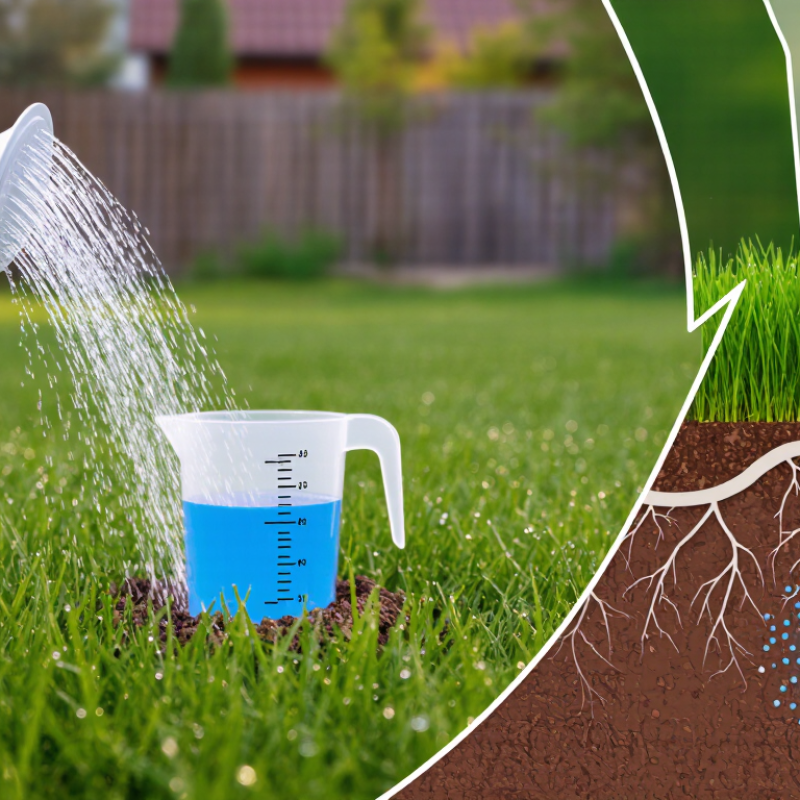
Soluble Lawn Fertilizer dissolves in water before its nutrients reach the grass. That simple change affects how quickly a lawn can respond. A measured dose mixed in a watering can or sprayer may deliver nutrients across the blades and into the soil. The green-up can appear within days, especially when grass is actively growing. But quick results do not guarantee better results. Too much product can scorch leaves, while poorly timed applications may waste nutrients.

Turfgrass specialist Dr. Thomas A. Nikolai’s practical guidance can be paraphrased this way: “Match fertilizer timing and amount to the grass’s growth, not just the calendar.” This is a paraphrase, not a verified verbatim quotation. His perspective points to a key principle: soluble products work best when applied at the label rate and watered as directed. They can be useful for correcting a nutrient shortage or supplying a controlled feeding. They are not a substitute for testing soil or understanding local growing conditions. Small details matter. Check the forecast, measure the concentrate carefully, and keep application even. A faint overlap can leave dark green stripes beside pale patches. This guide explains what soluble lawn fertilizer contains, how water carries its nutrients, and when this fast-acting option may suit a lawn. It also considers its limits, because a rapid response can tempt homeowners to apply more than grass needs.
What Is Soluble Lawn Fertilizer and How Does It Work?

Soluble Fertilizer Defined: Water-Soluble Nutrients in N-P-K Formulations

Soluble lawn fertilizer contains nutrients that dissolve in water before reaching the soil. Its N-P-K label shows nitrogen, phosphate, and potash percentages. For example, a 20-5-10 formula supplies 20% nitrogen, 5% phosphate, and 10% potash by weight. A 10-pound bag therefore contains two pounds of nitrogen. The rest includes other nutrients, carriers, or moisture.

Water carries these nutrients into the root zone quickly. Nitrogen supports green leaf growth, while phosphorus assists root development and energy transfer. Potassium helps regulate water movement and improves stress tolerance.

The Association of American Plant Food Control Officials describes these three nutrients as primary plant nutrients in its Official Publication. FAOSTAT data also place global mineral fertilizer nutrient use above 180 million tonnes annually, showing the scale of nutrient management worldwide.

Application rate matters more than a dark green lawn. Excess soluble nitrogen can move beyond shallow roots after heavy rain. A soil test gives better guidance than appearance alone. The U.S. Department of Agriculture recommends matching nutrient applications with soil conditions, crop needs, and timing. That principle fits lawns, too.

Experience exposes a weakness here. Soluble fertilizer works fast, but it leaves less room for careless measuring. Uneven spreading can create stripes, while dry soil may slow uptake. Water it in properly. Not excessively.

Reading the Grade: 20-20-20 Contains 20% N, 20% P₂O₅, and 20% K₂O

What Is Soluble Lawn Fertilizer and How Does It Work?

Soluble lawn fertilizer dissolves in water and delivers nutrients quickly to grass roots. The grade 20-20-20 means the product contains 20% nitrogen, 20% phosphate, and 20% potash by weight. These numbers refer to N, P₂O₅, and K₂O, not pure phosphorus or potassium. The remaining 40% may include carriers, fillers, or other approved ingredients. Nitrogen supports green leaf growth. Phosphate supports root development. Potash helps the lawn handle drought, traffic, and temperature stress.

The label can look simple, but it is easy to misread. A 10-pound bag supplies two pounds of nitrogen in a 20-20-20 formula. Soluble feeding may show results within days, especially when soil moisture is adequate. However, quick response also means a narrow margin for mistakes. Too much fertilizer can scorch leaf tips, encourage weak growth, or wash nutrients beyond the root zone. Soil testing remains more reliable than guessing, particularly when existing phosphorus levels are high.

Tips: Apply only to actively growing grass. Measure the area before mixing. Use clean water and follow the label rate carefully. Water lightly after application if the instructions allow it. Avoid feeding during heat or drought stress. I still find one detail worth checking: a greener lawn is not always a healthier lawn. Growth rate, root depth, and soil condition deserve equal attention.

From Application to Uptake: How Dissolved Nutrients Reach Grass Roots

Soluble lawn fertilizer contains nutrients that dissolve into soil water, often as charged ions such as nitrate and potassium. After watering or rainfall, these ions move through the thin film of water around soil particles. Grass roots absorb them across root surfaces, while fine root hairs explore nearby soil. Nitrogen can also enter through leaves, but roots do much of the work. Timing matters. Nutrients must be dissolved, yet heavy rain can carry some below the root zone or into drains.

The University of Minnesota Extension’s lawn-fertilizer guidance gives a broad annual nitrogen range of about 2–4 pounds per 1,000 square feet, adjusted for grass type and local conditions. That is a seasonal recommendation, not a dose for one application. Smaller, well-timed applications can better match active growth. In practice, a dry patch may stay pale even after feeding because water, compaction, or shallow roots limit uptake. Not all of it. Dissolved nutrients do not automatically reach roots; soil texture, moisture, and temperature affect their movement. A green-up is useful evidence, but it is not a precise measure of how much fertilizer the grass absorbed.

What Is Soluble Lawn Fertilizer and How Does It Work? - From Application to Uptake: How Dissolved Nutrients Reach Grass Roots

Stage What Happens Nutrients Involved How Nutrients Reach Roots Practical Note
1. Dissolving A soluble fertilizer is designed to dissolve in water, releasing nutrients into a solution. Some products are mixed with water before application; others dissolve when watered in. Depending on the formulation, it may supply nitrogen, phosphorus, potassium, and micronutrients. Dissolved nutrients are carried with water onto the soil and into its pores. Follow the label’s mixing instructions; concentrated fertilizer can injure grass if misapplied.
2. Application The solution is spread over the lawn, commonly with a watering can, hose-end applicator, or sprayer. Uniform coverage helps avoid over- and under-treated patches. All nutrients present in the applied solution. Water moves nutrients through the grass canopy toward the soil surface; subsequent watering can carry them into the root zone. Avoid applying before heavy rain or where runoff could carry fertilizer into drains or waterways.
3. Entry into soil Water infiltrates the soil, bringing dissolved nutrients into contact with soil particles, organic matter, and roots. Nitrogen may be present as nitrate or ammonium; potassium is commonly present as potassium ions; phosphorus is commonly present as phosphate ions. Nutrients move in soil water and may also interact with soil particles. Their movement depends on nutrient form and soil properties. Water lightly if the product directions call for it, while avoiding puddling and runoff.
4. Movement toward roots Nutrients reach roots mainly as roots grow into nutrient-containing soil or as nutrients move through soil water toward root surfaces. Nitrate is relatively mobile in soil water. Phosphate usually moves only short distances, while potassium movement varies with soil conditions. Water flow and diffusion help bring nutrient ions to the root surface; root growth explores additional soil. Soil texture, moisture, pH, and organic matter affect nutrient availability and movement.
5. Root uptake Grass roots absorb water and dissolved nutrient ions through root surfaces. Uptake is selective and depends on plant demand and root activity. Nitrogen supports proteins and chlorophyll; phosphorus contributes to energy-transfer processes; potassium helps regulate water balance and other plant functions. Nutrient ions in soil solution cross root tissues and are transported within the plant. A nutrient being soluble does not guarantee that grass will absorb it; roots also need suitable growing conditions.
6. Use by the grass After uptake, nutrients support growth and normal plant functions. Any nutrients not absorbed may remain in soil, be transformed, or move beyond the root zone. The plant uses each nutrient in different ways; needs vary with grass type, season, and growing conditions. Roots transport absorbed nutrients to growing tissues, where they are incorporated or used in plant processes. Base fertilizer decisions on soil-test results and product directions rather than assuming more fertilizer means better growth.

Key point: Soluble lawn fertilizer supplies nutrients in a form that can enter soil water quickly, but actual root uptake depends on application, watering, soil conditions, and active grass roots.

Nutrient Roles in Turf: Nitrogen, Phosphorus, and Potassium

Soluble lawn fertilizer dissolves in water and delivers nutrients quickly to turf roots.

Its effect depends on moisture, temperature, and accurate application. On a small lawn, uneven spraying can create dark green stripes beside pale grass. A calibrated spreader or measured watering can reduce this problem.

Nitrogen, phosphorus, and potassium perform different jobs.

Nitrogen drives leaf growth and creates the deep green color most homeowners notice. Too much nitrogen, however, can produce soft blades that need frequent mowing and may suffer during heat. Phosphorus supports root development and early establishment. Mature lawns often need little extra phosphorus unless a soil test shows a deficiency. Local regulations may also restrict its use near waterways.

Potassium strengthens turf’s internal water balance and improves tolerance to drought, cold, and traffic. It does not replace irrigation or repair compacted soil. It supports the plant under stress.

Timing matters.

For soluble fertilizer, water carries nutrients into the root zone rapidly. Applying it to dry soil can cause uneven growth or leaf injury, especially during hot weather.

I have seen lawns respond quickly to nitrogen, then weaken when watering and mowing were ignored. That result is easy to misread. Fertilizer can support healthy turf, but it cannot correct every soil or management problem. A soil test, seasonal application rate, and careful observation provide more reliable guidance than color alone.

Rates and Risks: 46-0-0 Urea Is 46% Nitrogen by Weight

Soluble lawn fertilizer dissolves in water and releases nutrients quickly. The key figure is 46-0-0 urea: 46% nitrogen by weight, with no phosphorus or potassium. The International Fertilizer Association identifies urea as one of the world’s most concentrated solid nitrogen fertilizers. A 50-pound bag therefore contains about 23 pounds of actual nitrogen.

The calculation matters. To apply 1 pound of nitrogen across 1,000 square feet, use about 2.17 pounds of 46-0-0 urea. That rate is not automatically safe for every lawn. Grass species, soil texture, weather, and mowing height change the outcome. University extension nutrient-management guides commonly recommend soil testing and careful calibration, rather than guessing with a scoop. I have seen uneven spreading leave dark green stripes beside pale grass. It looks efficient. It is not.

Urea dissolves rapidly, but surface-applied granules can lose nitrogen as ammonia gas, especially on warm, dry, alkaline soil. USDA nutrient-management guidance recommends incorporating urea through rainfall or irrigation soon after application. Too much water can move soluble nitrogen beyond the root zone. Too little water can leave white granules and scorched blades. Keep fertilizer off sidewalks and driveways. Never apply before heavy rain. The Fertilizer Institute’s nutrient stewardship framework uses the “right rate, right source, right time, and right place” principle, but real lawns still require judgment. A lower rate may be wiser than chasing instant color.

FAQS

What is soluble lawn fertilizer?

It contains nutrients that dissolve in water before reaching the soil. Water carries them toward grass roots quickly. Fast action has limits.

What does a 20-20-20 fertilizer grade mean?

It contains 20% nitrogen, 20% phosphate, and 20% potash by weight. A 10-pound bag contains two pounds of nitrogen. The remaining weight may include carriers, fillers, moisture, or other nutrients.

What do nitrogen, phosphate, and potash do?

Nitrogen supports green leaf growth. Phosphate supports root development and energy transfer. Potash helps regulate water movement and improve stress tolerance.

How do dissolved nutrients reach grass roots?

Water moves nutrients through thin films around soil particles. Fine root hairs absorb available ions near the root surface. Heavy rain can move nutrients below shallow roots. Not every dissolved nutrient gets absorbed.

How quickly can soluble fertilizer affect a lawn?

Visible green-up may appear within several days when soil moisture is adequate. Dry soil can slow nutrient uptake. Water matters as much as fertilizer.

How much soluble fertilizer should be applied?

Use the label rate and measure the lawn area before mixing. Annual nitrogen needs may range around two to four pounds per 1,000 square feet. Local grass types and soil conditions change that range. One application should not provide the entire seasonal amount.

Should fertilizer be applied during heat or drought?

Avoid feeding grass under severe heat or drought stress. Stressed roots may absorb nutrients poorly. Dry, pale soil needs water assessment first. Timing is imperfect, sometimes.

What problems can excessive soluble fertilizer cause?

Excess nitrogen may scorch leaf tips and create weak, rapid growth. Heavy rain can carry nutrients beyond the root zone. Uneven spreading may leave visible stripes. A dark green lawn is not always healthier.

Why is soil testing useful before fertilizing?

Soil testing reveals existing nutrient levels and possible deficiencies. It reduces guesswork, especially when phosphorus is already high. Appearance alone can mislead. Compaction, shallow roots, and poor watering may explain pale grass better.

Conclusion

Soluble Lawn Fertilizer is a product whose nutrients dissolve in water, making them available for movement through the soil and uptake by grass roots. Its N-P-K grade describes nutrient content by weight: a 20-20-20 formulation contains 20% nitrogen, 20% phosphate expressed as P₂O₅, and 20% potash expressed as K₂O. After application and dissolution, roots can absorb these nutrients as they take up water.

Each nutrient supports a different aspect of turf growth. Nitrogen encourages green, leafy growth; phosphorus supports root development; and potassium helps grass withstand stress and maintain overall function. Concentrated products require careful measurement: 46-0-0 urea, for example, contains 46% nitrogen by weight. Applying too much can damage grass or contribute to nutrient loss, so use rates appropriate for the lawn and water the product in as directed.


Madeline

Madeline

Madeline is a dedicated marketing professional with a wealth of expertise in our company's core offerings. With a keen understanding of the industry, she brings a unique perspective to her role, consistently delivering high-quality content that highlights the superior aspects of our products. As......