In recent years, soluble lawn fertilizers have gained attention for their quick and effective results. As the industry continues to evolve, selecting the best products remains a challenge for global buyers. Experts like Dr. Emily Parker, a renowned agronomist, emphasize, “The right soluble lawn fertilizer can transform an average yard into a lush landscape.”
These fertilizers dissolve easily in water, providing essential nutrients to grass. However, not all products are created equal. Buyers must consider factors like nutrient content and application methods. It's crucial to choose fertilizers that suit diverse climates and soil types. Each region presents unique challenges. For instance, humid areas may require different formulations compared to arid environments.
Despite the apparent benefits, many consumers struggle with over-fertilization. This can lead to nutrient runoff and environmental concerns. Furthermore, some products may not deliver on their promises. Therefore, informed decisions are vital. Evaluating personal lawn needs and researching credible reviews can lead to better outcomes. In a market filled with options, understanding the nuances of soluble lawn fertilizers is essential for any buyer looking to enhance their green spaces.
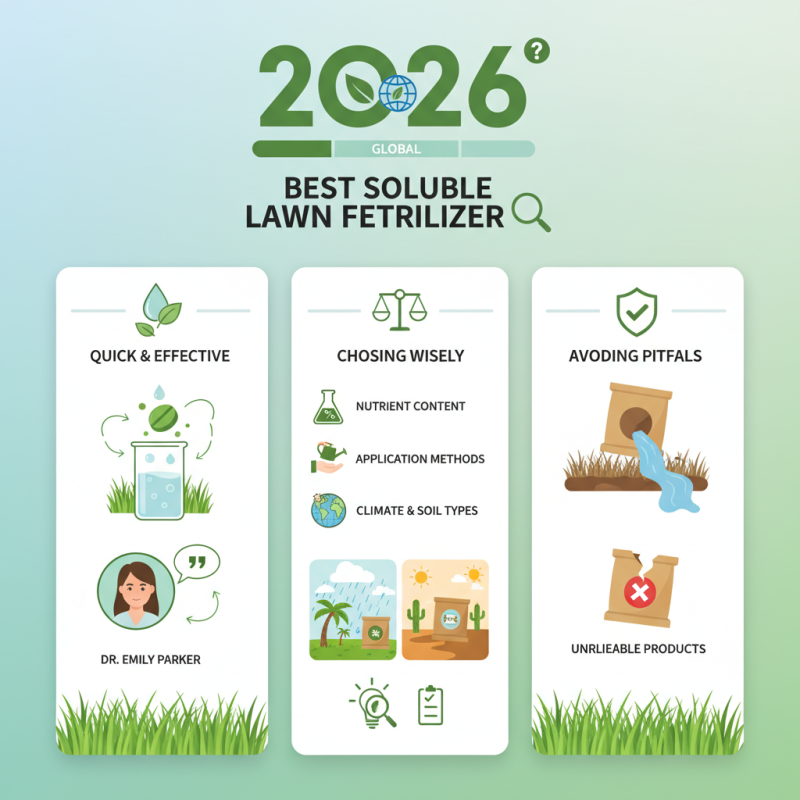
Soluble lawn fertilizers are a practical solution for homeowners and landscaping professionals alike. These fertilizers dissolve quickly in water, allowing for easy application and rapid nutrient absorption. They provide essential nutrients like nitrogen, phosphorus, and potassium, which are crucial for healthy grass growth. Applying these fertilizers can lead to lush, green lawns that are resilient against disease and drought.
One significant benefit is the versatility of soluble fertilizers. They can be used in various stages of lawn growth. Whether establishing new grass or maintaining an existing lawn, soluble options are effective. However, it's essential to follow recommended application rates. Over-fertilizing can harm the lawn and surrounding environment. This is an area where users often struggle, as the temptation to apply more for immediate results can lead to long-term issues.
Choosing the right soluble fertilizer may require some trial and error. What works well for one lawn may not suit another due to differing soil conditions and climate types. Regular soil testing can help determine the specific nutrient needs of your lawn. Many users overlook this step, leading to unbalanced nutrient levels. Being mindful of these factors can lead to more successful outcomes and a thriving lawn.
When selecting a soluble lawn fertilizer, several key factors come into play. Soil type is critical. Different soils hold nutrients uniquely. For example, sandy soils drain quickly, while clay soils retain moisture. Understanding your lawn's needs is essential. A soil test can guide you toward the right nutrient balance.
Nutrient content is another vital consideration. Nitrogen, phosphorus, and potassium are primary nutrients for growth. The ratio of these components can affect performance. According to industry reports, the ideal N-P-K ratio for general lawn health is often around 3:1:2. However, your lawn may need more specific ratios based on factors like grass type and season.
Tips: Always read the label for application rates. Over-fertilizing can harm your lawn and the environment. Also, consider the timing of application. Spring and fall are usually optimal for most grass types.
Lastly, remember that water-soluble options typically yield rapid results. However, they also require careful management to prevent nutrient leaching. It’s a balance that sometimes requires trial and error. Be observant and adjust your approach based on your lawn's response. Your decisions should reflect ongoing observation, allowing room for adjustment.
In 2026, soluble lawn fertilizers have gained significant attention among global buyers. Professionals emphasize the importance of selecting fertilizers that boost both growth and health. Research indicates that soluble fertilizers, rich in nitrogen, phosphorus, and potassium, promote rapid grass establishment. A study by the International Fertilizer Industry Association shows that 60% of lawn care experts recommend these nutrients for optimal lawn performance.
Leading brands focus on improving microbial activity in soil. This approach not only enhances nutrient absorption but also supports the ecosystem. Reports from the American Society of Agronomy suggest that organic components, found in top soluble fertilizers, improve soil structure. This leads to better water retention and reduced runoff. However, users often overlook the importance of application rates, which can lead to nutrient leaching.
Some brands are addressing this issue by providing detailed usage guides. These efforts are critical as improper fertilization can harm lawns. A recent survey highlighted that 40% of homeowners apply too much fertilizer. Unbalanced application can result in unsightly burn marks. The trend towards sustainable practices is essential for responsible lawn care. Balancing the need for lush green lawns with environmental considerations remains a challenge for many buyers.
Applying soluble lawn fertilizers effectively requires understanding the right methods. These fertilizers dissolve in water, making nutrients accessible to grass roots. Choosing the right application method can boost lawn health significantly.
One approach is the foliar feeding method. This involves spraying a soluble fertilizer solution directly onto the leaves of the grass. It allows for quick nutrient absorption. However, timing is crucial. Applying during the hottest part of the day can cause leaf burn. It’s better to do this in the early morning or late evening.
Another method is using a calibrated spreader. This ensures an even distribution of the soluble fertilizer. Avoid clumping in one area, as it can lead to over-fertilization issues. Regularly check for the proper settings based on the product instructions. Remember, adjusting based on your lawn's specific needs is vital. Too much fertilizer can harm your lawn's ecosystem. Always reflect on how your lawn is responding to these treatments for the best outcomes.
The environmental impact of soluble lawn fertilizers is a pressing issue. Many homeowners use these products for quick results. However, the rapid-release nutrients can lead to runoff. This runoff pollutes local waterways and harms aquatic ecosystems. Research indicates that excessive nitrogen and phosphorus cause algal blooms, depleting oxygen levels in water bodies.
Sustainability should be a priority for lawn care. Organic options often have a lower environmental footprint. They release nutrients slowly, reducing the risk of runoff. However, some users may find them less effective initially. This discrepancy can lead to frustration in users accustomed to the fast action of synthetic fertilizers.
Gardeners should also consider the broader implications of their choices. While soluble fertilizers provide immediate benefits, their long-term effects might not be favorable. Balancing effective lawn care with environmental stewardship is essential. Awareness and careful product selection can minimize harmful impacts on our planet. This balance is a journey, not a destination.
: Consider soil type, nutrient content, and application timing to choose the right fertilizer for your lawn.
Soil type affects how nutrients are held. Sandy soils drain quickly; clay soils retain moisture differently.
Nitrogen, phosphorus, and potassium are primary nutrients. They significantly influence your lawn's health and growth.
A common ratio is around 3:1:2, but specific needs vary by grass type and season.
Always read the label for application rates. Over-fertilizing can harm both your lawn and the environment.
Spring and fall are optimal times for most grass types to receive fertilization.
Excess fertilizer can lead to burn marks on grass and nutrient leaching into the environment.
They yield rapid results but require careful management to prevent nutrient loss through leaching.
Ongoing observation helps identify what works best for your lawn, allowing you to make necessary adjustments.
Balance the need for a lush lawn with environmentally responsible fertilization practices to mitigate harm.
In 2026, the market for Soluble Lawn Fertilizers continues to expand as gardeners and homeowners seek effective solutions for maintaining lush, healthy lawns. Soluble Lawn Fertilizers offer rapid nutrient absorption and can improve soil quality, making them an attractive option for quick greening effects. When selecting the right fertilizer, factors such as nutrient composition, application methods, and specific lawn needs must be considered to achieve optimal results.
Moreover, the environmental impact and sustainability of Soluble Lawn Fertilizers are essential topics, as users become increasingly conscious of their ecological footprint. Choosing eco-friendly products can support sustainable gardening practices while promoting healthy lawns. Effective application methods further enhance the benefits of these fertilizers, ensuring that nutrients reach the grass efficiently and contribute to long-term lawn health.

Nitro Fertilizer