Choosing the right NPK fertilizer for rice is crucial for successful cultivation. Rice is a staple food for billions worldwide. It requires specific nutrients to thrive, and NPK fertilizers provide the essential nitrogen (N), phosphorus (P), and potassium (K) needed for growth. However, not all fertilizers are created equal.
Understanding the balance of these nutrients is vital. Too much nitrogen can lead to excess foliage, while insufficient potassium may weaken plants. Farmers often struggle with selecting the right type, as various brands and formulations exist. Soil testing can help. It reveals nutrient levels and informs choices for NPK fertilizer for rice.
In recent years, sustainable options have gained popularity. Organic fertilizers promote long-term health but may need more research. Balancing productivity and environmental impact is challenging. It requires careful thought and adjustment. By considering the specifics of their soil and rice variety, farmers can make informed choices, ensuring a bountiful harvest while maintaining soil health.
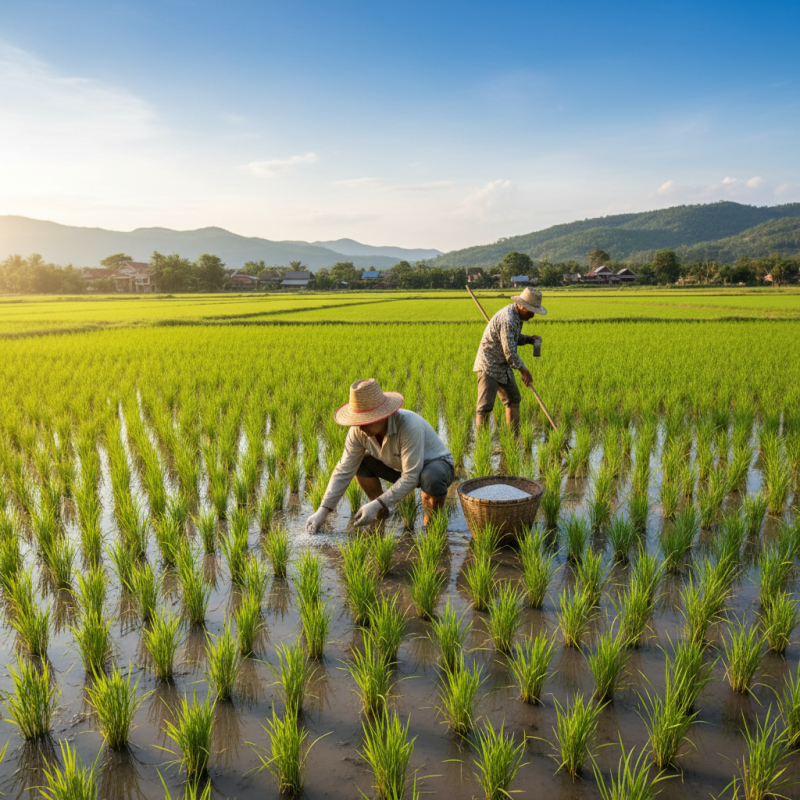
Understanding NPK Fertilizers: Composition and Importance for Rice
NPK fertilizers are essential for rice cultivation. They contain three vital nutrients: nitrogen (N), phosphorus (P), and potassium (K). Each element plays a significant role in plant growth. Nitrogen promotes leaf development, phosphorus enhances root and flower growth, while potassium improves overall plant health and disease resistance.
When choosing an NPK fertilizer for rice, consider soil testing. A soil test reveals nutrient deficiencies, guiding your selection. The right balance of NPK is crucial. Too much nitrogen can lead to lush foliage but poor grain yield. Conversely, insufficient phosphorus can result in weak roots and reduced flowering. Understanding these nuances is key for effective rice farming.
Different growth stages of rice require varying nutrient needs. Young plants require more nitrogen, while mature plants benefit from balanced nutrients. Farmers often change fertilizers throughout the growing season. This approach can be challenging, particularly for those new to rice cultivation. The learning process is ongoing. Monitoring plant response to fertilizers can lead to better decisions in the future.
Factors to Consider When Choosing NPK Fertilizers for Rice Cultivation
Choosing the right NPK fertilizer for rice cultivation is crucial for optimal growth. Several factors influence this decision. These include soil nutrient levels, rice variety, and local climate conditions. A soil test is an excellent starting point. It provides insight into existing nutrient levels and pH balance. This data can help you select an appropriate fertilizer ratio.
Rice often thrives with a balanced NPK ratio. For instance, a formula like 20-20-20 can support even growth in various stages. However, over-fertilization can lead to nutrient runoff and environmental harm. It's essential to find that delicate balance. Also, consider the delivery method of the fertilizer—granular or liquid. Granular options often provide slow-release benefits, while liquids can offer quick absorption.
Additionally, timing plays a critical role. Applying fertilizer before planting can be beneficial, but side-dressing during growth stages may maximize nutrient uptake. Monitor plant health regularly. Signs of deficiency can help you adjust fertilizer strategies. Keep in mind that trial and error is often necessary. Not all methods will yield perfect results. Each environment may produce different outcomes.
Types of NPK Fertilizers Suitable for Rice: Granular vs. Liquid Options
Selecting the right NPK fertilizer for rice is crucial for optimal growth and yield. NPK stands for nitrogen (N), phosphorus (P), and potassium (K). These three macronutrients are vital for rice health. A study by the Food and Agriculture Organization (FAO) indicated that an ideal NPK ratio for rice is often 16-16-8. This balance supports robust root development and overall plant vigor.
In terms of application, granular and liquid NPK fertilizers each have their advantages. Granular fertilizers, typically slow-release, provide nutrients over a longer period. This can be beneficial for maintaining steady growth. A report from the International Rice Research Institute (IRRI) suggests that incorporating granular fertilizers directly into the soil may improve nutrient uptake. However, they can take longer to show results.
Liquid NPK fertilizers act quickly. They can be absorbed rapidly through leaves and roots. This is particularly useful during critical growth stages. The challenge lies in ensuring even application, as uneven distribution can lead to nutrient deficiencies in some plants. Many farmers prefer liquid fertilizers for foliar feeding, especially during periods of stress. Both types have their merits. The choice often depends on specific farming conditions and goals.
Optimal Application Rates and Timing for NPK Fertilizers in Rice Farming
When applying NPK fertilizers for rice farming, understanding timing is crucial. Often, farmers are unsure of when to fertilize. Ideally, nitrogen should be applied during the tillering stage. This is when the rice plant begins to develop more shoots. A mid-season application of phosphorus can enhance root growth. Potassium, on the other hand, is essential during the grain-filling stage.
Determining the optimal application rates requires testing soil conditions. Soil testing helps in understanding nutrient deficiencies. Over-fertilization can lead to nutrient runoff, which harms the environment. Its effects on crop yield may not be immediately noticeable but can be detrimental in the long run.
Farmers sometimes overlook the weather conditions before applying fertilizers. Rainfall can wash away applied nutrients. Conversely, dry conditions can hinder nutrient availability. Creating a flexible fertilization plan can mitigate these risks. Staying informed about local agricultural practices helps improve outcomes in rice farming. Understanding the unique demands of your field is key.
Common Mistakes to Avoid When Selecting NPK Fertilizers for Rice
Selecting the right NPK fertilizer for rice is crucial for optimal growth. However, many farmers make common mistakes that can severely impact their yield. One significant error is overlooking soil testing. According to industry reports, nearly 40% of farmers do not test their soil, leading to incorrect nutrient applications. This can result in nutrient imbalances, stunted growth, or even crop failure.
Understanding the specific nutrient needs of rice is essential. Rice requires a balanced supply of nitrogen (N), phosphorus (P), and potassium (K). A common mistake is using a one-size-fits-all NPK ratio. Research from agricultural institutions shows that tailored NPK ratios based on local soil conditions significantly enhance yields. For instance, areas with low nitrogen may require a higher N ratio to boost growth.
Tips: Analyze your soil's nutrient profile before selecting fertilizers. Always consider local climate conditions. Monitor your crops closely for signs of nutrient deficiencies. Additionally, consult experts in agronomy for recommendations that fit your specific needs. By taking these steps, you can avoid the pitfalls of improper fertilizer use and set your rice crop up for success.
FAQS
: The right NPK fertilizer ensures optimal growth and healthy plants. It affects overall yield and quality.
Conduct a soil test. This reveals existing nutrient levels and pH balance for better choices.
A balanced ratio like 20-20-20 works for various growth stages. It aims for even nutrient distribution.
Over-fertilization can lead to nutrient runoff. This harms the environment and may reduce long-term yields.
Apply nitrogen during the tillering stage. This stage boosts the development of more shoots.
Phosphorus during mid-season supports root growth, while potassium is crucial during grain filling for better yield.
Rainfall can wash nutrients away. Dry conditions can limit availability, affecting the effectiveness of your fertilizers.
Regularly monitor plants for signs of deficiency. Adjust your fertilizer strategies based on observed health.
Yes, different environments may yield varied results. Trials can help find the best approach for your field.
Staying informed about local practices improves outcomes. It helps align fertilization plans with environmental needs.
Conclusion
Choosing the right NPK fertilizer for rice cultivation is crucial for optimizing yield and ensuring healthy plant growth. Understanding the composition of NPK fertilizers, which includes nitrogen (N), phosphorus (P), and potassium (K), helps farmers select the appropriate type based on the nutritional needs of the rice at various growth stages. It's important to consider factors such as soil health, crop variety, and environmental conditions to effectively choose the right NPK fertilizer for rice.
When evaluating options, farmers can choose between granular and liquid NPK fertilizers, each having its advantages depending on application preferences and field conditions. Determining optimal application rates and timing is vital to maximize nutrient uptake without causing damage to the crop. Additionally, avoiding common mistakes such as over-fertilization or neglecting soil tests can lead to more effective rice farming practices and ultimately enhance crop production.

 Nitro Fertilizer